There are words that drift quietly into everyday conversation until, one day, you realize everyone around you seems to know what they mean except you. Tumbons is one of those words. It has been appearing in travel blogs, outdoor living guides, and governance discussions with increasing frequency, and for good reason. Whether you are researching Thailand’s local administrative system or shopping for the perfect outdoor lounger, understanding this term opens the door to something genuinely useful. The concept carries real, tangible benefits that deserve a clear, honest explanation.
What Exactly Are Tumbons?
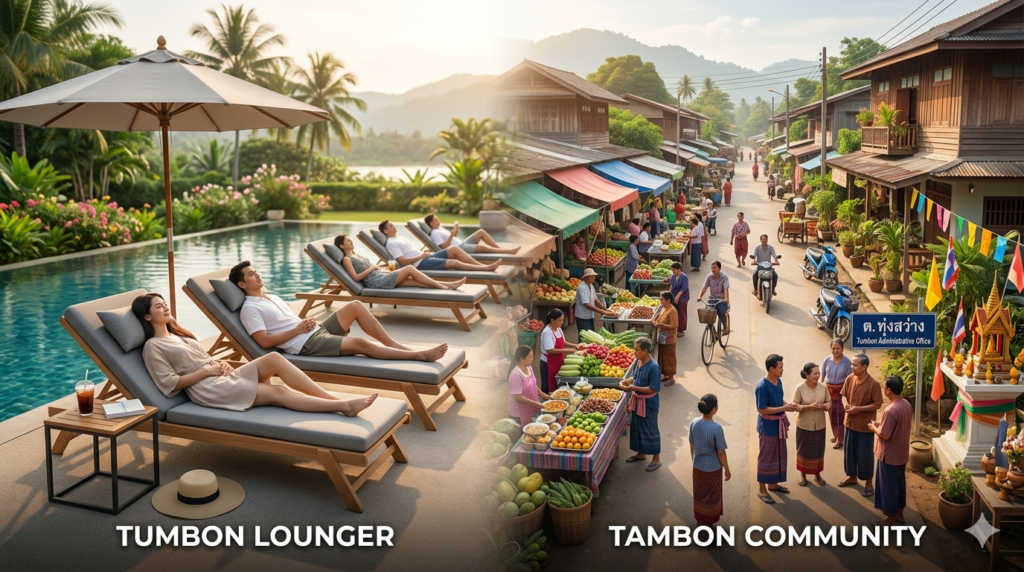
The word carries two distinct meanings, and knowing both prevents a great deal of confusion. In Thailand’s administrative hierarchy, a tumbon — more formally spelled “tambon” — is a subdistrict that sits between a district and a village. It functions as the operational heartbeat of local governance, where services, planning, and community identity converge at the grassroots level. Thailand has over 7,000 of these units, each managing roads, public utilities, education support, and cultural events for the clusters of villages within its boundaries.
In the context of outdoor living and leisure furniture, tumbons refer to portable reclining loungers — lightweight, foldable chairs designed for comfort across a variety of settings, from patios and poolsides to beaches and camping grounds. The furniture interpretation draws conceptual inspiration from the Spanish word “tumbona,” historically associated with sun chairs used in Mediterranean coastal culture. Both meanings, interestingly, share a common thread: they represent practical structures built to support and serve people in their everyday lives.
The Comfort Advantage That Sets Them Apart
What makes a lounger worth choosing over a regular chair? The answer lies in how the body actually responds to extended sitting. Standard outdoor chairs force the spine into positions that create tension in the lower back and shoulders over time. A well-designed reclining lounger distributes body weight across a wider surface, allowing the muscles to release rather than hold. The result is genuine relaxation rather than the mild endurance test that poor seating often demands.
Modern versions of these loungers typically feature adjustable backrests that allow users to shift between an upright reading position and a nearly flat reclining angle. This flexibility means the chair adapts to you rather than the other way around. For people who spend long stretches of time outdoors — whether working remotely on a terrace, recovering from physical activity, or simply enjoying an afternoon in the garden — this adaptability translates into measurable physical comfort.
Portability as a Lifestyle Feature
One of the most frequently cited advantages is how easy these pieces are to move. Most quality models weigh between five and fifteen pounds and fold into a compact form that fits in a car boot or can be carried over one shoulder. That portability matters because outdoor living is rarely confined to a single spot. People move between the garden, the poolside, the beach, and camping grounds, and they want their comfort to travel with them.
This is a meaningful shift from older outdoor furniture traditions, where garden chairs were heavy, built to stay in one place, and often required seasonal storage or dedicated covers. A portable lounger removes that friction entirely. You set it up where you want it, fold it away when you are done, and take it anywhere the day takes you. For apartment dwellers with limited balcony space, this is especially valuable.
Ergonomic Support and Physical Well-Being
The physical benefits extend beyond simple comfort. When the body is allowed to recline properly, pressure on the lumbar spine decreases, leg circulation improves, and muscle tension in the neck and shoulders eases. Some designs elevate the legs slightly relative to the torso, a position often associated with reduced stress on the cardiovascular system. Regular use of ergonomically supportive seating during leisure time can contribute to better posture habits overall, particularly for individuals who spend long hours at desks.
There is also a psychological dimension worth considering. Deliberately stepping away from a work environment and settling into a comfortable outdoor space has measurable effects on stress reduction. The act of making relaxation intentional — choosing a specific, comfortable place to rest — tends to be more effective than trying to decompress in a chair not designed for that purpose. Good outdoor seating is, in this sense, an investment in mental restoration as much as physical rest.
Versatility Across Every Setting
What distinguishes a truly useful piece of furniture from a single-purpose product is its range of application. These loungers perform well in an impressive variety of contexts. By the pool, they serve the obvious role of sun lounging and post-swim rest. In a garden or backyard, they become reading chairs, conversation spots, or quiet retreat spaces. On camping trips, portable foldable models replace cumbersome alternatives. At beach outings, they elevate the experience considerably over a towel on the sand.
Beyond location, they also adapt to different users. Children find them comfortable for outdoor naps or reading. Adults use them for everything from morning coffee to evening stargazing. Older users benefit from the supported recline that reduces the physical effort of getting in and out of low seating. That breadth of usefulness is rare in furniture and explains much of the category’s growing popularity.
Durability, Materials, and Long-Term Value
A lounger that warps after one summer or whose fabric fades within a season is not a good investment, regardless of its initial price. Quality construction in this category typically relies on aluminum or powder-coated steel frames — both resistant to rust and capable of withstanding prolonged outdoor exposure. The fabric choices matter equally. UV-resistant, water-resistant textiles maintain their colour and structural integrity through extended sun exposure and occasional rain.
With routine maintenance — wiping down the frame, cleaning the fabric, and storing the piece under cover during extreme weather — a well-made model can last five years or more. That longevity changes the cost calculation significantly. An initial spend that delivers years of reliable use represents better value than repeatedly replacing cheaper alternatives that deteriorate quickly.
The Cultural Dimension Worth Understanding
For anyone with an interest in Southeast Asia, understanding tumbons in their administrative sense adds depth to how Thailand is read and experienced. These subdistricts are not bureaucratic abstractions. They are living communities where annual festivals, local markets, agricultural traditions, and cultural identity are organized and sustained. Thailand’s well-known One Tambon One Product initiative, which encouraged each subdistrict to develop and market a unique locally produced item, illustrates how much economic and cultural energy flows through this layer of governance.
Travelers who understand this structure navigate rural Thailand more intuitively. Researchers studying local governance, rural development, or community resilience find the tambon system a rich subject precisely because it represents decentralized administration at a human scale — close enough to the people it serves to be genuinely responsive.
Whether you arrive at this topic through outdoor living or through curiosity about how communities organize themselves, the benefits of understanding it are real. Practical knowledge about the dual meaning of tumbons helps you make better choices as a consumer and a more informed reader of the world around you. That is a straightforward return on a small investment of attention.