Tooth extraction is a common dental procedure, but the healing process that follows can vary from person to person. Most of the time, recovery is smooth and predictable. However, in some cases, complications arise—one of the most uncomfortable being a dry socket. Knowing how to recognize it early can make a significant difference in managing pain and preventing further issues.
Before diving into symptoms and warning signs, it helps to understand what a normal healing process looks like. That’s where the comparison of a healthy socket vs dry socket becomes essential.
Understanding the Healing Process After Extraction
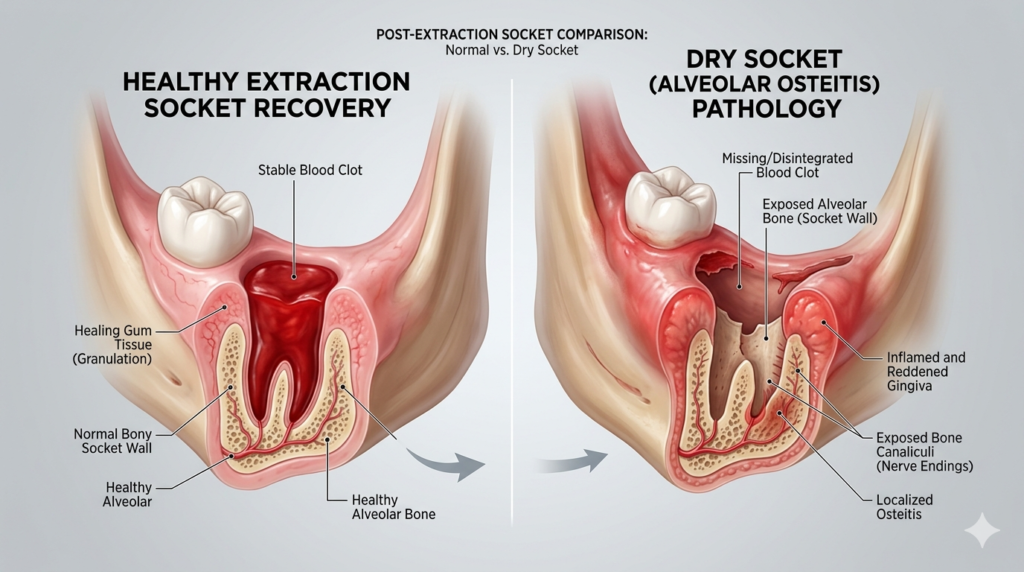
When a tooth is removed, your body immediately begins repairing the area. A blood clot forms in the empty socket, acting as a protective layer over the underlying bone and nerves. This clot is not just a temporary patch—it’s the foundation for new tissue growth.
In the first 24 to 48 hours, mild discomfort, slight swelling, and minimal bleeding are all expected. Over the next few days, the pain should gradually decrease, and the gum tissue begins to close over the socket.
But what happens when this natural process is interrupted?
What Is a Dry Socket?
A dry socket, medically known as alveolar osteitis, occurs when the protective blood clot either fails to form properly or gets dislodged too early. Without that clot, the bone and nerve endings underneath are exposed, leading to intense pain and delayed healing.
This condition usually develops within three to five days after the extraction. It’s more common after wisdom tooth removal, but it can happen with any tooth extraction.
How Can You Tell If Something Is Wrong?
At first, it can be tricky to differentiate between normal healing discomfort and something more serious. So what should you actually look for?
The key lies in paying attention to how your symptoms evolve over time.
A normal healing socket will gradually feel better. A dry socket, on the other hand, tends to worsen.
Here’s how the experience typically differs when comparing a healthy socket vs dry socket:
- Pain that intensifies instead of improving
- A visible empty socket where the clot should be
- A foul taste or bad breath that doesn’t go away
- Pain radiating to the ear, eye, or neck on the same side
If you notice these signs, it’s not something to ignore.
Pain: The Most Noticeable Warning Sign
Let’s talk about pain, because this is usually the first red flag.
After an extraction, some level of discomfort is normal. But with a dry socket, the pain becomes sharp, deep, and persistent. It often starts a few days after the procedure, just when you expect things to get better.
Have you ever felt pain that seems to spread beyond the original area? That’s another clue. Dry socket pain can radiate toward your ear or jaw, making it feel more severe than typical post-extraction soreness.
Visual Clues Inside the Socket
If you’re comfortable checking the extraction site, visual signs can also help.
A healthy socket usually appears dark due to the presence of the blood clot. As healing progresses, it may look slightly white as new tissue forms.
In contrast, a dry socket often looks empty or shows exposed bone, which may appear whitish or gray. This difference is a clear indicator when assessing healthy socket vs dry socket conditions.
Of course, not everyone can easily examine their own mouth, and that’s perfectly fine. Pain and other symptoms are often enough to guide your decision.
Bad Taste and Unpleasant Odor
Another symptom that often gets overlooked is a persistent bad taste in the mouth. This isn’t the usual post-surgery dryness—it’s something stronger and more unpleasant.
Why does this happen? Without the protective clot, food particles and bacteria can collect in the socket, leading to infection and odor. If brushing and rinsing don’t improve the taste, it’s worth paying attention.
Risk Factors You Should Know About
Not everyone who gets a tooth extraction develops a dry socket. So what increases the risk?
Several factors can interfere with proper clot formation or stability:
- Smoking or using tobacco products
- Drinking through a straw shortly after extraction
- Poor oral hygiene
- Hormonal influences, such as oral contraceptives
- Traumatic or complicated extractions
Even something as simple as vigorous rinsing can dislodge the clot. That’s why dentists often emphasize gentle care during the first few days.
When Should You Contact a Dentist?
It’s easy to second-guess yourself after a dental procedure. You might wonder: “Is this normal, or am I overreacting?”
A good rule of thumb is to monitor the timeline. If your pain is increasing after the third day instead of improving, it’s time to reach out to your dentist.
Other signs that warrant a call include:
- Severe, throbbing pain that doesn’t respond to medication
- Visible bone in the socket
- Persistent bad breath or taste
- Swelling that worsens instead of subsiding
Dentists can quickly confirm whether you’re dealing with a dry socket and provide relief, often by cleaning the area and applying a medicated dressing.
Treatment and Relief
The good news is that a dry socket, while painful, is treatable.
Once diagnosed, your dentist may:
- Clean the socket to remove debris
- Place a medicated dressing to protect the area
- Prescribe pain relief medication
- Recommend specific rinses to aid healing
Pain relief is usually noticeable within a short time after treatment. Healing may still take a few days, but the discomfort becomes much more manageable.
Can You Prevent a Dry Socket?
Prevention plays a big role in avoiding complications. Following your dentist’s aftercare instructions carefully can significantly reduce your risk.
Simple steps include:
- Avoid smoking for at least 48–72 hours
- Do not use straws or spit forcefully
- Stick to soft foods initially
- Keep the area clean without aggressive rinsing
- Take prescribed medications as directed
It might seem like a lot of caution for a small procedure, but these steps protect the clot that your body depends on for healing.
Final Thoughts
Healing after a tooth extraction doesn’t have to be complicated, but it does require awareness. Understanding the difference between normal recovery and a potential problem can save you from unnecessary pain.
By recognizing the signs early and knowing what to expect, you put yourself in a better position to act quickly if something feels off. Whether it’s worsening pain, unusual taste, or visible changes in the socket, these clues matter.
Keeping the distinction between a healthy socket vs dry socket in mind can guide your decisions during recovery and help you seek timely care when needed.