
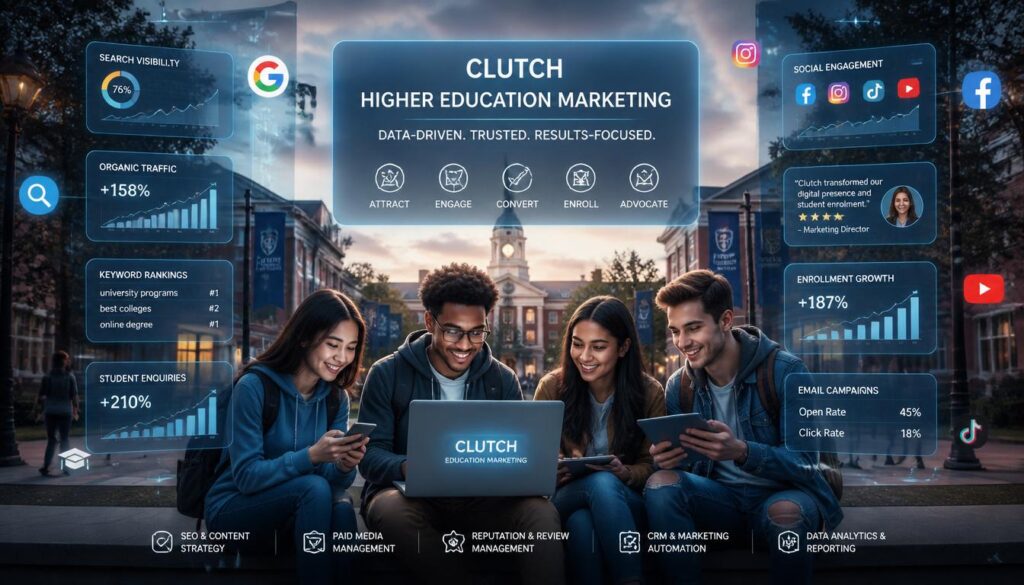
Higher education has entered a highly competitive digital era where institutions are no longer competing only on academics or campus facilities. They are competing on visibility, reputation, digital experience, and trust. In this environment, clutch+higher+education+marketing has emerged as a modern approach that helps universities, colleges, and online education providers attract, engage, and convert prospective students more effectively.
Unlike traditional marketing methods that relied heavily on print media, brochures, and physical outreach, today’s education marketing is driven by data, search engines, content, and student behavior. Prospective students now make decisions based on online research, reviews, social media presence, and digital engagement long before they ever speak to an admissions officer.
This article explores how clutch+higher+education+marketing works, why it is important, and how institutions can use it to build stronger enrollment pipelines and long-term credibility.
Understanding Clutch+higher+education+marketing
The term clutch+higher+education+marketing refers to a strategic, performance-driven approach to promoting educational institutions using digital tools, reputation-building methods, and student-centered communication.
It focuses on:
- Increasing online visibility
- Building institutional credibility
- Driving high-quality student leads
- Improving enrollment conversion rates
- Strengthening long-term brand authority
Instead of relying on guesswork, this approach uses measurable data and student insights to guide marketing decisions.
At its core, clutch+higher+education+marketing blends several key digital strategies:
- Search engine optimization (SEO)
- Content marketing
- Social media engagement
- Online reputation management
- Paid advertising campaigns
- Email automation
- Conversion rate optimization
- Video storytelling
The goal is not just traffic generation, but meaningful engagement that leads to actual student enrollment.
Why Clutch+higher+education+marketing Matters Today
The education industry has changed significantly over the past decade. Students are no longer limited to local universities or traditional degree programs. They now have access to global education options, online certifications, hybrid learning platforms, and skill-based training programs.
This shift has created intense competition among institutions.
Without a strong digital presence, even high-quality universities can struggle to attract students. That is why clutch+higher+education+marketing is so important—it ensures institutions remain visible and relevant in a crowded marketplace.
Key reasons it matters include:
- Students research online before applying
- Competition exists on a global scale
- Decision-making cycles are longer and more complex
- Trust plays a major role in enrollment decisions
- Digital experience influences perception of quality
Institutions that fail to adopt modern marketing strategies risk losing potential students to competitors with stronger online visibility.
SEO in Clutch+higher+education+marketing
Search engine optimization is one of the most powerful components of clutch+higher+education+marketing. When students search for programs, scholarships, or career paths, search engines become their first point of contact.
Common student search queries include:
- Best universities for engineering
- Affordable online MBA programs
- Nursing schools near me
- Scholarships for international students
- Computer science degree online
If an institution is not optimized for these searches, it loses valuable opportunities.
Effective SEO strategies include:
- Keyword-optimized program pages
- High-quality blog content
- Technical website optimization
- Mobile responsiveness
- Fast page loading speed
- Internal linking structures
SEO provides long-term visibility, making it a foundational part of clutch+higher+education+marketing.
Content Marketing and Student Trust
Content marketing is essential for building trust and guiding students through their decision-making journey. In clutch+higher+education+marketing, content is not just promotional—it is educational and value-driven.
Students want answers to real questions such as:
- What career will this degree lead to?
- What is campus life like?
- How much does this program cost?
- What are the job opportunities after graduation?
Institutions can build authority by publishing:
- Career guides and industry insights
- Admission process explanations
- Scholarship breakdowns
- Student success stories
- Program comparisons
- Faculty interviews
High-quality content helps institutions position themselves as trusted advisors rather than just service providers.
Social Media in Clutch+higher+education+marketing
Social media is one of the most powerful tools for connecting with modern students. Platforms like Instagram, TikTok, YouTube, Facebook, and LinkedIn allow institutions to showcase authentic student experiences.
In clutch+higher+education+marketing, social media is used to:
- Share real student stories
- Highlight campus culture
- Promote events and achievements
- Provide admission updates
- Engage with prospective students
Authenticity is critical. Students prefer real, relatable content over overly polished advertisements.
Short videos, live sessions, and behind-the-scenes content perform especially well in building engagement and trust.
Reputation Management and Online Reviews
Reputation plays a central role in clutch+higher+education+marketing because students heavily rely on reviews before making enrollment decisions.
A strong reputation can significantly increase applications, while negative feedback can discourage potential students.
Reputation management includes:
- Monitoring review platforms
- Responding to student feedback
- Encouraging positive testimonials
- Highlighting alumni achievements
- Addressing concerns transparently
Institutions that actively manage their reputation build stronger trust and long-term credibility.
Website Experience and Conversion Optimization
A university’s website is often the first direct interaction a student has with the institution. In clutch+higher+education+marketing, the website acts as a conversion engine.
An effective website should include:
- Clear navigation structure
- Easy application process
- Detailed program information
- Tuition and scholarship details
- Virtual campus tours
- Strong calls-to-action
- Mobile-friendly design
Even small improvements in user experience can significantly increase inquiry and enrollment rates.
Data Analytics in Clutch+higher+education+marketing
Data is essential for improving marketing performance. Institutions using clutch+higher+education+marketing rely on analytics to understand student behavior and optimize campaigns.
Analytics can help identify:
- Most popular programs
- Traffic sources
- Content performance
- Application drop-off points
- Conversion rates
With this data, institutions can refine their strategies and allocate budgets more effectively.
For example, if analytics show that most international students visit scholarship pages, marketing efforts can be adjusted to highlight financial aid opportunities more prominently.
Personalization in Student Engagement
Modern students expect personalized communication. Generic messaging is no longer effective in clutch+higher+education+marketing.
Personalization may include:
- Targeted email campaigns
- Program-specific landing pages
- Location-based messaging
- Career-focused recommendations
Automation tools allow institutions to deliver the right message to the right student at the right time.
This increases engagement and improves conversion rates.
Video Marketing and Student Influence
Video content is one of the most engaging formats in higher education marketing. In clutch+higher+education+marketing, video plays a major role in storytelling and trust-building.
Videos can showcase:
- Campus tours
- Student testimonials
- Classroom experiences
- Faculty insights
- Graduation ceremonies
Platforms like YouTube, TikTok, and Instagram help institutions reach younger audiences more effectively than traditional media.
Challenges in Clutch+higher+education+marketing
Despite its advantages, clutch+higher+education+marketing comes with challenges:
- High competition among institutions
- Rising digital advertising costs
- Changing student expectations
- Maintaining authenticity at scale
- Managing online reputation consistently
Institutions must continuously adapt to stay relevant and competitive in a rapidly evolving digital landscape.
Future of Higher Education Marketing
The future of clutch+higher+education+marketing will be shaped by technology and personalization. Emerging trends include:
- Artificial intelligence-driven marketing
- Virtual reality campus experiences
- Predictive enrollment analytics
- Hyper-personalized communication
- Voice search optimization
- Advanced automation systems
Students will increasingly expect seamless digital experiences that match their personal goals and career aspirations.
Conclusion
Clutch+higher+education+marketing represents a modern, data-driven approach to attracting and enrolling students in a highly competitive global education market. It combines SEO, content marketing, social media, reputation management, analytics, and personalization to create a complete student engagement system.
Institutions that adopt this approach can build stronger visibility, higher trust, and better enrollment outcomes. As the education landscape continues to evolve, those who invest in strategic, student-centered marketing will remain ahead of the competition and better positioned for long-term success.